
When an adult child walks into a parent's living room and finds them sitting all afternoon, the silence can feel heavier than the room itself. Then a small robotic cat settles on the lap, starts to purr, and the whole visit changes. The parent reaches out, smiles, and suddenly there's something to talk about, something to touch, and something that seems to invite the day back in.
That reaction is why many caregivers are looking at a robot cat for elderly support as more than a novelty. In dementia care, loneliness support, and comfort-focused routines, these companions can work as a nonpharmacological tool that gives older adults a gentle, repeatable source of engagement. The important questions are practical ones, how these devices work, what the evidence demonstrates, how to choose one, and how to keep it useful after the first week.
Introduction to Robot Cats for Seniors
A caregiver often starts here after realizing that live-pet care isn't realistic anymore. A cat may have been a loved one's favorite animal for decades, but now the house has allergy concerns, mobility limits, or a memory condition that makes pet care hard to manage. A robotic cat gives families a way to preserve the feeling of companionship without adding feeding schedules, litter boxes, or vet visits.
The strongest reason families consider this option is simple, older adults don't always need a pet that does complex things. They often need something that responds, stays available, and feels familiar in the hand. That makes a robot cat for elderly use especially relevant in dementia support, where comfort, routine, and low-pressure interaction matter more than training or independence.
A 2022 scoping review found that most low-cost robotic pet studies for older adults took place in long-term care facilities or in participants' homes, and the Joy for All robotic cat showed up as the most common device in the evidence base, which makes it one of the foundational products in this category PMC review. The same review also showed that the research came from real-world eldercare settings, not just lab demos, which is important because these devices are meant for everyday companionship, not performance testing.
Caregivers usually get the best results when they treat the robot as a calming companion, not as a toy that must impress on day one.
Families reading about pet-like care tools may also find it helpful to compare this topic with broader guidance on articles on senior animal health, especially when they're deciding whether a live animal, plush companion, or robot fits the household best.
Understanding Robot Cats
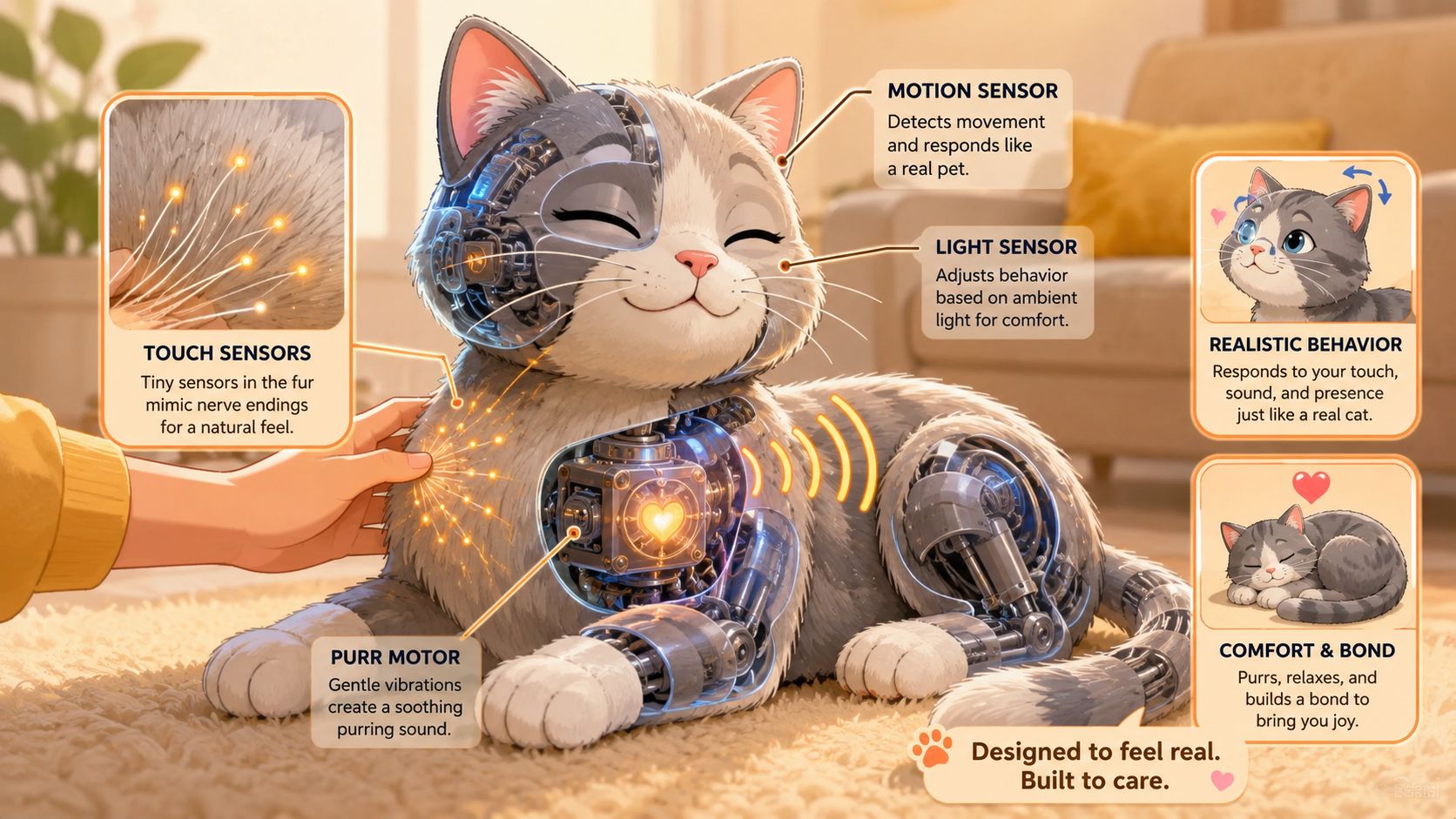
A robotic cat is built to trigger the kind of comfort many people associate with a real pet. It does not think like an animal, but it still uses sensors, movement, and sound cues to create a believable interaction. A useful way to understand it is to picture the sensors under the fur as a simple stand-in for the nerves in a real cat's skin. They detect touch and movement, then send a response that feels alive to the person holding it.
The Joy for All Companion Cat shows how this design works in practice. It uses motion and light sensors plus vibration-based purring so it can react to petting, holding, and hugging, and its sleep mode helps conserve battery life when it is left alone product details. The same product weighs about 1.9 kg and runs on 4 C batteries, which matters because it is light enough for lap use without feeling flimsy product details.
Why the details matter
The whole point of the design is low-effort interaction. A senior does not need to feed it, walk it, or interpret complicated controls. The cat responds when someone touches it, then settles again, which makes it easy to include in calm routines like watching television, listening to music, or sitting after lunch.
Practical rule: if a device looks cute but still needs constant explanation, it is probably not the right companion for an older adult who wants simplicity.
Caregivers often get better results when they treat the robot as a steady companion instead of a novelty item that has to impress on day one. That mindset also helps with long-term use, because the goal is not a one-time reaction. It is a familiar object that can stay part of daily life with basic upkeep, regular battery checks, and a predictable place in the room.
For families comparing pet-like care tools, articles on senior animal health can help them weigh a live animal, a plush companion, or a robot against the rest of the household. Guidance on communication with dementia is also useful, because the best approach often depends on calm routines, short interactions, and reading the older adult's response instead of forcing a reaction.
Independent reporting describes the device as a companion pet aimed at comfort rather than complex behavior BBC report. That distinction helps caregivers set realistic expectations. A robot cat is closer to a familiar presence on the sofa than to a pet that demands training, chores, or constant attention.
Evidence and Benefits for Elderly Care
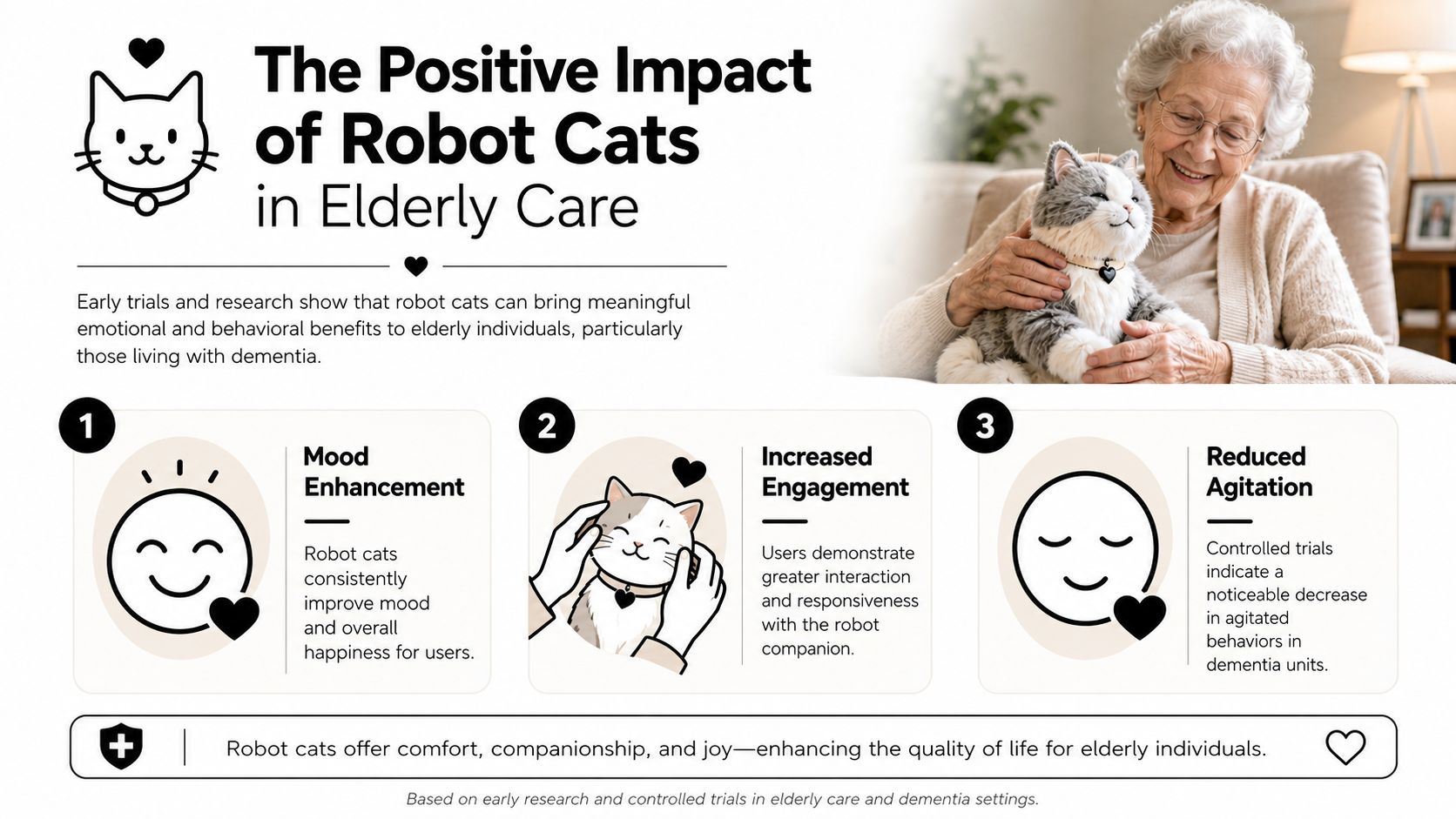
A useful way to judge a robot cat for elderly care is to look past novelty and focus on what happens in real care settings. In one controlled study in a nursing home special care unit for residents with dementia, sessions with the robotic cat increased pleasure and interest, while a plush cat also reduced agitation clinical study. That result helps explain why these companions matter, they can create visible emotional engagement for older adults who may not respond as well to spoken prompts alone.
What later reviews added
A 2022 review in the Journal of Medical Internet Research examined feedback from 1,327 reviewers and found that 65.86 percent reported positive emotions in older adults using a robotic cat, while 17.18 percent described the device as calming, comforting, and giving users a sense of purpose JMIR review. For caregivers, that kind of summary is useful because it turns many individual reports into a clearer pattern. In plain terms, the device often supports mood and emotional regulation in care contexts.
The same review also helps answer a common question about long-term use. A randomized study on affordable social robots in care homes reported no novelty effect through sustained use and concluded that robot pets could reduce neuropsychiatric symptoms and occupational disruptiveness for residents, including those who were subjectively lonely JMIR review. That matters for families who worry the cat will only be interesting for a short time. If the device stays in a fixed place, is charged on a routine, and is offered during the same quiet moments each day, it is more likely to become part of normal care rather than a forgotten toy.
How caregivers should read the evidence
The evidence does not show that a robot cat replaces human care. It shows a different kind of support, a steady object that can invite touch, ease tension, and offer a small point of connection when words are hard.
A helpful way to think about it is as a familiar cue, almost like a favorite chair or a soft blanket that signals comfort. For families managing dementia or long hours at home, that can matter because calmer interactions often start with something simple and repeatable. Caregivers who already use communication with dementia techniques often find that the robot fits best when it is introduced gently, kept in a predictable routine, and paired with familiar language instead of pressure to respond.
Families comparing a live pet, a plush companion, and a robot can also use articles on senior animal health to weigh the rest of the household's needs. That comparison is useful because the best choice is not the most impressive device, it is the one that can be kept up over time with the least confusion and the most comfort.
Suitability Criteria and Accessibility Considerations
A robot cat works best when it fits into the person's daily rhythm, not when it asks the person to change theirs. A family that has already noticed what calms, confuses, or frustrates an older adult can usually judge fit more accurately than a product page can. The goal is to choose a companion that feels natural in the home and simple enough to keep using over time.
Who tends to benefit most
The strongest candidates are usually older adults who like tactile comfort, feel isolated at times, or live with mild-to-moderate cognitive impairment and still respond to gentle sensory cues. A robot cat can also work well for someone who wants the feel of a pet without the feeding, grooming, or cleanup that a live animal requires. If the person is startled by objects that move on their own, gets annoyed by unfamiliar technology, or feels uneasy around realistic-looking toys, the fit is weaker. Caregivers should also ask a practical question, can the person hold the companion safely without dropping it or becoming confused by it?
Some families find it helpful to check the broader picture before they buy. A short conversation about memory changes, daily routines, and stress triggers can show whether a pet-like companion is enough support or whether they should assess your dementia risk as part of a fuller care plan.
A buyer-focused guide notes that robotic cats for seniors typically cost about $100 to $300 and need basic maintenance such as battery checks and cleaning, ideally handled by a family helper on a weekly schedule buyer guide. The purchase price is only part of the commitment. Like a kitchen appliance that works well only if someone keeps it charged and wiped down, the device stays comforting only when someone remembers the small upkeep tasks.
If a family cannot keep up with routine care, even a simple companion can turn into clutter instead of comfort.
A simple comparison to think through
| Question | Better fit | Less suitable |
|---|---|---|
| Does the person enjoy holding soft objects? | A lap-friendly robot cat | A device that must sit on a shelf |
| Is caregiving time limited? | A low-care companion | A model with frequent setup needs |
| Are allergies a concern? | A robotic pet with no dander | A live animal |
| Does the home already feel cluttered? | A small, easy-to-store design | A large novelty device |
Families who want a broader screen for memory health can also use assess your dementia risk as a conversation starter, especially when they are deciding whether a pet-like companion is enough support or whether they need a fuller care plan.
Accessibility features matter just as much as the emotional fit. Light weight, simple activation, and easy cleaning usually matter more than flashy extras, because a companion should feel easy to pick up, easy to understand, and easy to keep in use. Readers looking at assistive design for older adults can also compare features with technology for disabled people, since the same practical questions often apply, such as whether a person can operate the device without strain and maintain it without extra help.
Use Cases and Practical Examples
A robot cat often helps most when it is tied to a real moment in the day, not treated like a novelty item on a shelf. One daughter introduced one to her mother after noticing she paced less when she had something soft to hold. She did not frame it as a fix. She used it as a quiet companion during afternoon visits, and that simple choice made the first interaction feel familiar instead of forced.
Over time, the mother began reaching for the cat on her own, which gave the daughter a steadier window to talk, redirect, or sit nearby. That kind of gradual adoption matters because older adults often need repetition before a new device feels natural. A small routine can work like a familiar chair, it becomes useful because it is in the same place at the same time.
A second caregiver used a robotic cat with a stroke survivor who missed having a pet but could not manage live-animal care and was sensitive to dander. The robot gave him the tactile comfort he wanted without bringing in allergy problems, and it became part of his evening rhythm rather than something he touched only once in a while. That is one of the most practical uses of this technology. It keeps a familiar kind of comfort in the home without adding the chores, health concerns, or supervision that come with a live animal.
A third family found that the robot created a small pause in the middle of long caregiving days. The relative did not need constant prompting to interact, and the cat's presence made it easier for a caregiver to step out of the room for a few minutes without the same level of guilt or worry. Research has also pointed to similar calming use, with robotic cats used as nonpharmacological tools that can reduce agitation while supporting pleasure and engagement clinical study.
These examples also show why maintenance matters after the first week, not just on day one. A robot cat works best when families fold it into a routine, check the battery, clean it gently, and notice whether the older adult still reaches for it. If the device is left untouched, the problem is usually not the cat itself. The routine around it may need to change.
For caregivers working alongside aides or facility staff, the device can fit into existing workflows when everyone knows how it will be used. CNA tips for dementia care is a useful reference for that kind of team-based support, especially when a robot cat is part of a broader calming plan. Care teams can also use how to prevent caregiver burnout as a reminder that a companion device should reduce strain, not become another task that drains energy.
Practical Guide for Caregivers
A robot cat works best when the family treats it like part of daily care, not a novelty that gets pulled out once and forgotten. The first day matters, but the fourth week does too. A slow introduction, simple expectations, and a routine that already exists in the home usually give the device a better chance of becoming useful.
A step-by-step start
Start with unboxing, battery installation, and a quick test of the basic response features. Let the older adult watch before encouraging touch, especially if they feel unsure about moving objects or startle easily. Then place the cat in a familiar spot, such as a favorite chair or lap blanket, so the first interaction links the device to comfort rather than to something strange.
Keep the first sessions short. Encourage gentle petting, speaking to the cat if that feels natural, and pairing the interaction with a familiar cue like soft music or a regular family visit. That pattern helps the robot fit into the day the way a favorite mug fits into a morning routine, useful because it is familiar.
The maintenance plan should stay just as simple.
- Check batteries weekly: make it a named task so nobody assumes someone else handled it.
- Wipe the fur gently: keep the surface clean without soaking the device.
- Test sensors during the visit: confirm the cat still responds to petting and touch.
- Watch for skipped use: if the cat sits untouched for days, the routine may need to change.
A caregiver's mindset
Treat the device like a shared household tool, not a gadget that can be ignored after setup. The most common problem is neglect, not failure. A helper who folds battery checks and cleaning into a weekly visit keeps the robot ready without turning upkeep into another chore buyer guide.
The YouTube resource below can help caregivers who want a visual overview of the setup process and interaction style.
For families coordinating support across multiple helpers, it helps when one person owns the basics and everyone else knows the plan. A practical framework for that broader coordination is how to prevent caregiver burnout, because even a useful device should reduce strain, not add another layer of stress. The same idea also applies in team-based care, where clear roles keep the robot cat from becoming one more loose task. CNA tips for dementia care is a useful reference for that kind of support.
Limitations Cost Ethical Considerations and Alternatives
A robot cat can bring comfort, but it shouldn't be sold as a cure-all. Cost is still real, and so is upkeep. Even the lower-cost options need battery attention and cleaning, and families who don't plan for that often end up disappointed when the cat stops feeling “alive” because no one maintains it.
Ethics matter too. In dementia care, caregivers need to think carefully about consent, emotional attachment, and whether a robot is being used to enrich the day or to replace human contact. The safest approach is to treat it as a supplement to care, not a substitute for conversation, touch, or visits from real people.
There's also a social question, some older adults may feel embarrassed by a robotic pet, especially if they think others will see it as childish or fake. Others may love it immediately. The right response is not to argue with either reaction, but to match the tool to the person's comfort level.
Alternatives still have a role.
- Live pet therapy can offer warmth and unpredictability, but it also brings allergies, care demands, and supervision needs.
- Plush toys are simple and comforting, but they don't respond back.
- Social visits from family, volunteers, or staff remain the strongest option for human connection, though they're not always available on demand.
A balanced family plan often uses more than one of these tools. The robot cat fits best when the goal is dependable tactile comfort, low-burden interaction, and a calm routine that can repeat every day without adding much work.
Conclusion and Next Steps
A good robot cat for elderly care is not about replacing affection, it's about making comfort easier to access. The device works best when families understand how it responds, what the evidence supports, and what maintenance it needs over time. That usually means looking past the novelty and asking a more useful question, will this make daily life calmer and more manageable for the person I'm caring for?
For many families, the answer is yes when the fit is right. The strongest next step is a low-risk trial in a familiar room, with one person responsible for setup, one person responsible for upkeep, and everyone clear that the goal is comfort, not performance. If the cat helps the person settle, engage, or relax, then it has earned its place.
If you're comparing options, revisit the cost range, the cleaning routine, and the person's cognitive and physical needs before you buy. A thoughtful choice now saves confusion later, and that's what makes caregiving technology practically useful.
A CTA for Family Caregiving Kit.